
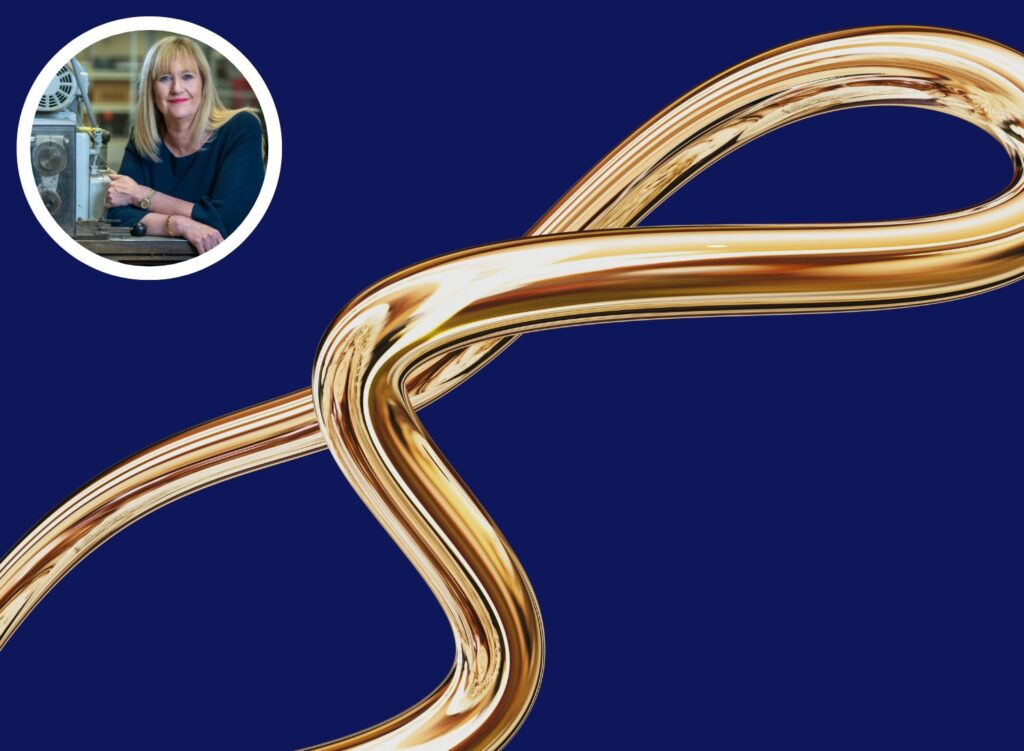
Having joined The Royal Mint in 2008 and rising through senior leadership to become its first female CEO in 2018, Anne Jessopp has been at the forefront of redefining a 1,100-year-old institution. Today, the Mint operates across precious metals investment and collecting, anchored in British craftsmanship and a forward-looking strategy. In this interview, she discusses transformation, circularity and the future of gold in an evolving market environment.
The Royal Mint operates at a unique intersection of heritage, craftsmanship and innovation – how do you see its role evolving in today’s dynamic global environment?
The Royal Mint is transforming for the future, and our traditional role of making the UK’s coinage has evolved significantly over recent years.
Our role today is underpinned by our expertise in British craftsmanship, honed over 1,100 years of our history.
We’ve faced challenges like the declining use of cash head-on and developed new and growing businesses in areas including precious metals recovery and jewellery making.
The journey we’re on will ensure our business thrives for another 1,100 years.
With over 1,100 years of history, how does The Royal Mint continue to translate its institutional legacy into a forward-looking and commercially dynamic strategy?
Future-proofing The Royal Mint means thinking seriously about sustainability and ensuring our legacy endures. It’s a key principle of our strategy, and we’re the only sovereign mint to have our ambitious net-zero targets validated by the Science-Based Targets initiative.
Our precious metals recovery business, Reformation Metals, is a good example of this. We’re processing e-waste at our manufacturing site and extracting gold and other precious metals from discarded technology, contributing to the UK’s circular economy.
The recovered gold from this process feeds directly into our jewellery business, 886 by The Royal Mint, alongside silver recovered from medical X-rays. Our Responsibly Sourced Physical Gold ETC on the London Stock Exchange is backed by physical bars in our vault, around half of which are made entirely from recycled gold.
We know that consumers are making more conscious choices, and we want to meet their expectations. By the end of 2026, we’re aiming to produce all gold commemorative coins from recycled gold.
Diversity and inclusion are increasingly shaping leadership conversations across industries – how are these values reflected within The Royal Mint, both culturally and at leadership level?
It’s an extraordinary privilege to lead this unique organisation, and to be the first woman to do so. Half of our Executive Leadership team are women, and that’s something I’m genuinely proud of.
But inclusion isn’t just about who sits at the top table, it’s about the culture every person in our organisation experiences day to day. We’re committed to making The Royal Mint an inspiring and empowering place to work, where everyone can grow professionally and feel genuinely supported. Our workforce is the reason we’ve been able to achieve what we have so far.
We also believe in showing up externally. We work with partners who share our values because we know that the conversations we have outside our walls matter too.
Recent releases, such as the Spice Girls commemorative coin, highlight the role of storytelling in precious metals – how important is narrative and cultural relevance in shaping the future of collectible coins?
Storytelling has always been at the heart of what we do. Every coin tells a story, whether it’s marking a moment in history or celebrating a cultural icon. What’s changed is our understanding of who we’re telling those stories for. Releases like the Spice Girls coin reflect our commitment to listening to what our customers really (really!) want. We know there’s enduring love for traditional Royal Mint products, but we also know that tapping into fandom, whether music, gaming or beyond, is how we bring a new generation of collectors into the fold.
Cultural relevance isn’t just about the subject matter, though. By committing to producing all gold commemorative coins from recycled gold by the end of this year, we’re ensuring that the stories we tell reflect the values our customers increasingly care about.
As the role of national mints continues to evolve, how do you see The Royal Mint’s position within the broader global precious metals ecosystem?
The Royal Mint may be over 1,100 years old, but our focus is firmly on the future. We’ve successfully navigated the evolving landscape of declining cash usage by diversifying our business, expanding our consumer division, achieving record-breaking sales of gold and precious metals, and venturing into innovative, profitable markets with significant international growth.
I am immensely proud of how swiftly and successfully we’ve reinvented ourselves. The global precious metals ecosystem is dynamic and competitive, but we offer something very difficult to replicate: over a millennium of craftsmanship, trust and provenance, combined with a modern and sustainable business. We’re at an exciting phase of our transformation, and we’ve got much more to offer.
