
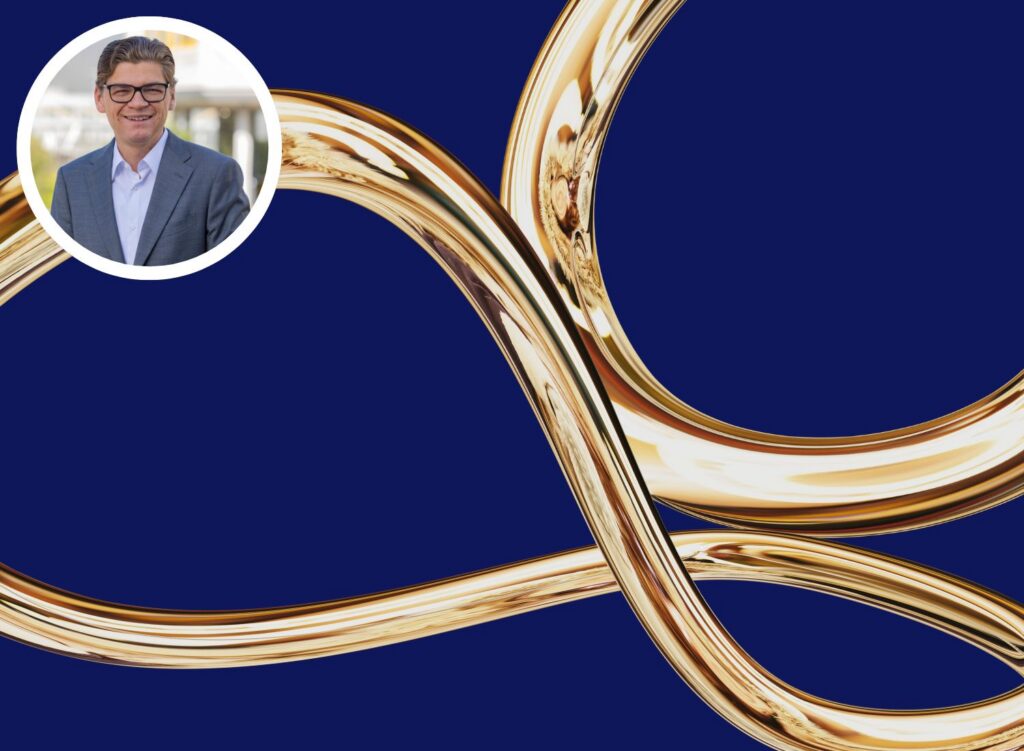
Having risen through innovation and product leadership roles within Heraeus before becoming Co-CEO of Argor-Heraeus SA, Dr Robin Kolvenbach brings a uniquely cross-disciplinary perspective to the evolving precious metals industry. In this conversation, he reflects on the growing importance of traceability, responsible sourcing and technological innovation, as well as the need for deeper collaboration across the global value chain as the sector navigates rising expectations around transparency, resilience and long-term sustainability.
Dr. Kolvenbach, your career path – from chemistry and innovation leadership within Heraeus through to your role today as Co-CEO of Argor-Heraeus – reflects a uniquely broad and interdisciplinary perspective on the precious metals industry. Looking back, how has your scientific and technical background influenced the way you approach leadership, innovation and long-term strategic decision-making?
My background in chemistry and chemical engineering has fundamentally shaped how I think about leadership. Science teaches you to approach complexity with curiosity, discipline, and humility – you rely on data, but you also learn to challenge assumptions and continuously refine your hypotheses. That mindset has stayed with me throughout my career.
In my earlier roles – from research and development to global product management and innovation leadership at Heraeus – I was deeply involved in translating fundamental science into industrial applications and viable business models. This experience taught me that innovation is rarely a single breakthrough; it is the result of consistent iteration, cross-functional collaboration, and a willingness to embrace calculated risk.
In addition, my studies and work in innovation taught me that people need freedom, trust and psychological safety to be creative and solve complex issues. In practice, I see my role as an enabler: making sure everyone at Argor-Heraeus has what they need to succeed, offering sparring where it’s helpful, and giving people the means to do their best work.
Today, as Co-CEO of Argor-Heraeus, I try to apply that same structured thinking to leadership and strategy. Whether we are making investments, evaluating new technologies, or navigating market volatility, I believe strongly in combining analytical rigor with long-term thinking and creativity. At the same time, science reminds you that no system exists in isolation — and that is equally true for our industry. Therefore, building strong partnerships across businesses and associations as well as maintaining a birds-eye view is essential for sustainable success.
Argor-Heraeus is widely regarded as a benchmark for quality, integrity and responsible practices within the precious metals industry. What long-term values and strategic priorities do you believe have been most important in building and maintaining that position internationally?
Argor-Heraeus has the ambition to become the most responsible precious metal refiner and producer. As we believe that there is never an end to this ambition, we would never claim that we reached our target, but we will always remain in the state of “becoming” to keep focus and continuously improve.
Argor-Heraeus’s leading position is deeply rooted in a consistent set of long-term values: quality, integrity and customer focus.
Maintaining our position internationally requires continuous commitment to these values. From a strategic standpoint, I would highlight three priorities we are currently focusing on:
- Responsible sourcing and transparency with the ambition to help the whole industry move forward
- Uncompromising quality and precision to meet our customer’s highest expectations
- Operational excellence and innovation to enhance processes and invest in future-ready technologies
These priorities are not static. As our industry evolves, so do we – but the core values underpin everything we do at Argor-Heraeus to provide a better service every single day.
The luxury watch and jewellery industries place extraordinary importance on precision, craftsmanship, traceability and consistency. How does Argor-Heraeus work alongside leading maisons to meet these exceptionally high standards?
The foundation for working with luxury maisons is trust. That trust starts with our responsible sourcing practices, which go significantly beyond what the industry requires as standard. We believe our responsibility constitutes our license to operate.
In addition, working with leading maisons requires a level of precision and reliability that leaves no margin for error. From this, partnerships emerge that are built on decades of trust and shared expectations.
At Argor-Heraeus, we support this through advanced refining and metallurgy expertise, strict process control and quality assurance, full traceability systems, and close technical collaboration with our clients.
As traceability is such an important topic for our luxury clients, please allow me to go a bit deeper here. At Argor-Heraeus we have set new benchmarks with our traceability system, which is powered by advanced technologies, connects every step of the value chain, from mine to market, and thereby ensures the physical origin of gold is verified and responsibly sourced.
Ultimately, our role is not just to supply gold, but to be a trusted partner in craftsmanship, enabling our clients to fulfill the exceptional standards their brands represent.
Industry collaboration & responsible sourcing: Through your roles at both the LBMA and the Alliance for Responsible Mining, you are closely involved in shaping some of the industry’s most important conversations around responsible sourcing, transparency and long-term sustainability. How do you see collaboration between refiners, mining communities, institutions and global industry bodies evolving in the years ahead?
Through my roles at the LBMA and the Alliance for Responsible Mining, I have the privilege to engage with a wide range of stakeholders across the gold ecosystem.
One thing is abundantly clear: no single organisation can address the challenges of responsible sourcing alone. The future lies in deepening collaboration across the entire value chain.
Looking ahead, I believe we will see greater integration of digital traceability tools, stronger alignment on standards, and more direct engagement with artisanal and small-scale mining communities. The goal must be to create a system that is not only compliant, but genuinely impactful and beneficial to all stakeholders along the value chain.
Outlook for the gold industry: Looking ahead, what gives you the greatest sense of optimism about the future of the gold industry, and where do you believe the sector still needs to evolve most significantly in order to maintain long-term institutional and public confidence?
What gives me optimism about the future of gold is its enduring relevance. Gold continues to play a unique role as a store of value, a material for high-end applications, and increasingly as an asset whose provenance matters.
To maintain long-term confidence, the industry must continue to evolve in transparency and traceability, sustainability and impact, and innovation and efficiency.
I am convinced that if we embrace these changes proactively the gold industry will not only retain its relevance but strengthen its position as a trusted and responsible sector in the global economy.
